Latest Different Social Status Novel
 Completed
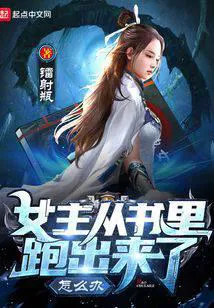
Chu Ge is a writer of harem novels.
As he was writing about the female sect leader, one of the strongest cultivators in the world, falling in love…
A woman appeared in his room, pointing a sword at his neck: “If you dare write that I fell in love with that man, I’ll kill you.”
 Completed
In her previous life, she was pushed into a river and forced to marry a man who was cruel and heartless. After the marriage, the s*umbag husband leveraged her father’s influence to return to the city. The two endured a twenty-year marriage devoid of intimacy because she couldn’t bear for him to touch her. Deep in her heart, she harbored a love she couldn’t confess—a “cinnabar mole.”
Later, her father passed away due to illness, followed by her mother. Left at the mercy of her abusive husband, she was tormented to the point of losing herself. It was then she discovered that her father hadn’t died of illness but had been poisoned slowly with a chronic toxin by her husband.
She died in Zhang Shiye’s arms, gently touching his face as she said, “If only it had been you who saved me back then.” Zhang Shiye was overcome with grief, unable to stop crying, and could only repeat to her over and over again…
 Ongoing
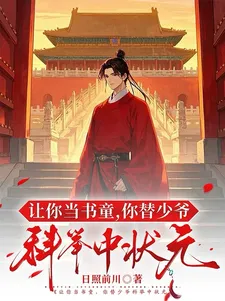
In his previous life, Cui Xian was a PhD in Chinese Language and Literature from a prestigious university.
In this life, he has transmigrated into an impoverished family in ancient times.
A destitute household, a pregnant mother, young siblings, a father and Eldest Uncle who have failed the imperial examination six times, a grandmother who has driven herself into hysteria fantasizing about her sons making the honor roll, and an eight-year-old boy-himself.
Cui Xian: This is just too tragic.
To change his fate, Cui Xian goes out to work and becomes a Study Servant for a wealthy Young Master.
But the Young Master is a hopeless academic failure, terrified of entering the examination hall. He comes up with a terrible idea: having Cui Xian take the imperial examination in his place.
Not only does Cui Xian pass, but he “goes on a rampage.”
At eight, he begins formal studies. At eight, he writes “Ode to the Goose.” By eight and a half, he pens “Pity the Farmer.” At nine, he composes countless works that leave the literary greats of the time heartbroken and retiring their pens.
His eight-legged essays establish the format itself, earning him the title of “the originator.”
He debates scholars on stage, defeating renowned intellectuals with his eloquence.
His annotations on the Four Books are included in official academies, becoming the de facto textbooks for the imperial examination.
At seventeen, he becomes the Top Imperial Scholar.
He even mentors six students who also become Top Imperial Scholars.
By twenty-seven, he enters the cabinet as the Grand Chancellor, achieving the pinnacle of power.
He becomes the last pillar of Great Liang’s literary world, a model and idol for all scholars.
Of the ten measures of talent in the world, he alone possesses eight.
He retreats to compose poetry and essays, advances to write policy papers for the imperial examination, governs the nation with his pen, and secures peace on horseback.
Single-handedly, he extends the dynasty’s lifespan by three centuries.
He eradicates pirates, defeats nomadic invaders, develops cannons, builds warships, opens new maritime routes, and leads expeditions to Europe.
He becomes the behind-the-scenes controller of sixteen global nations.
When he stands, the emperor dares not sit.
Officials and ministers weep bitterly, longing for his return: “When will the Grand Chancellor finally ascend the throne?”
And it all began on that fateful day, when Cui Xian took the imperial examination in place of the Young Master…